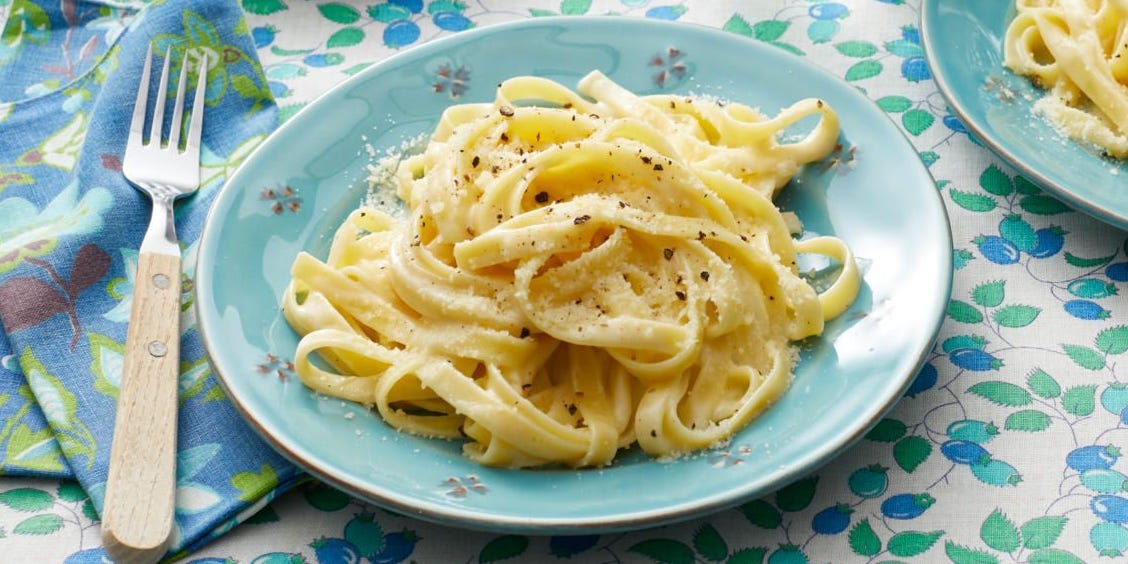
Unveiling the True Roman Secret: Authentic Fettuccine Alfredo
When you hear the words "fettuccine alfredo," what culinary image springs to mind? For many, it's a luscious, heavy cream-based sauce, often infused with garlic, perhaps dotted with parsley or even chicken. This popularized version has become a beloved staple in North American cuisine, but it's a far cry from its Roman origins. Prepare to have your perceptions challenged, because the authentic true Roman Fettuccine Alfredo is a masterpiece of minimalism, relying on just three humble ingredients to create a dish of unparalleled creaminess and satisfaction.
Forget the complicated sauces, the heavy cream, and the garlic. The original Fettuccine Alfredo: No Cream, Just 3 Ingredients is a testament to the Italian philosophy that quality ingredients, expertly handled, need no embellishment. This article will delve into the fascinating history, the ingenious technique, and the essential tips for mastering this iconic pasta dish, proving that sometimes, less truly is more.
From Humble Beginnings: The History of Original Fettuccine Alfredo
To truly appreciate the magic of authentic Fettuccine Alfredo's history, we must journey back to early 20th-century Rome. The year was 1908, and a compassionate restaurateur named Alfredo di Lelio, proprietor of the now-famous 'Alfredo alla Scrofa,' sought to create a nourishing and palatable dish for his wife, Ines, who was recovering after childbirth and experiencing a loss of appetite. What he devised was a deceptively simple pasta dish: freshly made fettuccine, high-quality butter, and finely grated Parmigiano-Reggiano cheese.
This humble yet profound creation, sometimes referred to as fettuccine al burro (fettuccine with butter) in Italy, quickly transcended its origins. It gained international fame in the 1920s when American silent film stars Mary Pickford and Douglas Fairbanks tasted it during their honeymoon in Rome. They were so captivated by the dish that they presented Alfredo with a golden fork and spoon, and shared the recipe back home, sparking a sensation. However, as the dish traveled across the Atlantic, it began to evolve. American culinary traditions, often favoring richer, more robust flavors, gradually introduced ingredients like heavy cream, garlic, and various other additions, transforming it into the version many know today. While delicious in its own right, it strayed significantly from di Lelio's original intention, overshadowing the elegant simplicity of the Roman classic.
The Science of Silkiness: Why This 3-Ingredient Dish Works
The brilliance of authentic Fettuccine Alfredo isn't in a complex recipe, but in a masterful understanding of culinary chemistry. The secret weapon, often overlooked, is the humble pasta water. As fettuccine cooks, it releases starch into the water, transforming it into a cloudy, golden elixir. This starchy liquid is the emulsifier, the invisible hand that binds the fats from the butter and the cheese into a homogeneous, velvety sauce that clings perfectly to every strand of pasta.
Key Elements for Perfect Emulsification:
- Starchy Pasta Water: This is non-negotiable. The starch molecules in the water create a bridge between the fat (butter and cheese) and the water content, allowing them to form a stable emulsion rather than separating. Always reserve more pasta water than you think you'll need.
- Finely Grated Parmigiano-Reggiano: The finer the grate, the quicker and more evenly the cheese melts into the hot pasta and butter. Using a microplane or the small side of a box grater is crucial here. Large shreds will melt inconsistently, leading to a lumpy texture.
- High-Quality Butter: Since butter is one of only three ingredients, its quality shines through. Opt for unsalted, European-style butter with a higher fat content for the best flavor and texture.
- Heat and Speed: The residual heat from the freshly cooked pasta is vital. It melts the butter and cheese, initiating the emulsification process. Working quickly ensures that everything comes together before the pasta cools down, preventing a greasy, clumpy sauce.
When these elements combine correctly, the result is a sauce that is impossibly creamy, rich, and satisfying, yet surprisingly light compared to its cream-laden counterparts. It’s a testament to how simple ingredients, when respected and understood, can create something truly extraordinary.
Mastering the Technique: Crafting Your Own Authentic Fettuccine Alfredo
Crafting authentic Fettuccine Alfredo is less about precise measurements and more about precise technique and timing. It's an intuitive dish that rewards attention and quick action. Here’s how to unlock its Roman magic in your own kitchen:
Essential Steps for Success:
- Cook Your Fettuccine Properly: Use a generous amount of well-salted water. Cook the fettuccine until it's perfectly al dente. This is crucial as it will continue to cook slightly when tossed with the sauce. Do NOT rinse the pasta; you want to preserve every bit of that precious starchy coating.
- Grate Your Parmigiano Fine: As mentioned, use a microplane or the small side of a box grater for an incredibly fine, almost powdery texture. This ensures seamless melting.
- Prepare Your Sauce Base: In a large, wide bowl (preferably warmed), combine a generous amount of high-quality unsalted butter, cut into small pieces, with the finely grated Parmigiano-Reggiano.
- Transfer Immediately: Using tongs, transfer the hot fettuccine directly from the boiling water into the bowl with the butter and cheese. Do not drain it in a colander; you want to carry over some of that starchy cooking water.
- Toss, Toss, Toss: Work quickly and vigorously. Use tongs or two forks to toss the pasta, butter, and cheese together. The heat from the pasta will melt the butter and cheese, and the residual pasta water will help create the emulsion.
- Gradually Add Pasta Water: As you toss, if the sauce seems too thick or dry, gradually add splashes of the reserved hot pasta water, a tablespoon at a time, continuing to toss. This is where the magic happens, transforming it into that silky, clinging consistency. You are looking for a glossy, uniform sauce that coats the pasta beautifully, not a watery or clumpy one.
- Serve Immediately: Authentic Fettuccine Alfredo is a dish that waits for no one. Its texture is at its peak right after preparation. Serve it on warm plates, perhaps with a final sprinkle of Parmigiano-Reggiano and a grind of fresh black pepper, though even pepper is an optional addition to the purest Roman version.
Pro Tips for Perfection:
- Warm Your Serving Bowls: Cold plates can cause the sauce to seize up quickly. A quick rinse with hot water or a few minutes in a warm oven will make a difference.
- Don't Be Shy with Butter and Cheese: This dish is about indulgence and quality. Don't skimp on these two crucial ingredients. The ratio matters; typically, for every 250g (½ lb) of pasta, you might use 100-120g (approx. ½ cup) of butter and 100-120g (approx. 1 cup lightly packed) of finely grated Parmigiano.
- Taste and Adjust: While simple, the exact amount of pasta water needed can vary. Taste as you go and adjust for saltiness (from the pasta water and Parmigiano) and consistency.
Embrace the Simplicity: Your Culinary Journey to Rome
The journey to mastering authentic Fettuccine Alfredo is a rewarding one. It's a culinary lesson in the power of simplicity, a reminder that the most profound flavors often come from the purest ingredients. By stripping back the unnecessary additions and focusing on the core components and their interaction, you're not just making a meal; you're connecting with a piece of Italian culinary heritage.
Next time you crave Fettuccine Alfredo, step away from the jarred sauces and the heavy cream. Embrace the Roman secret: pasta, butter, and Parmigiano-Reggiano, expertly brought together with starchy pasta water. You'll discover a dish that is light, intensely flavorful, and undeniably elegant, proving that the true essence of Italian cooking lies in its beautiful simplicity.
